

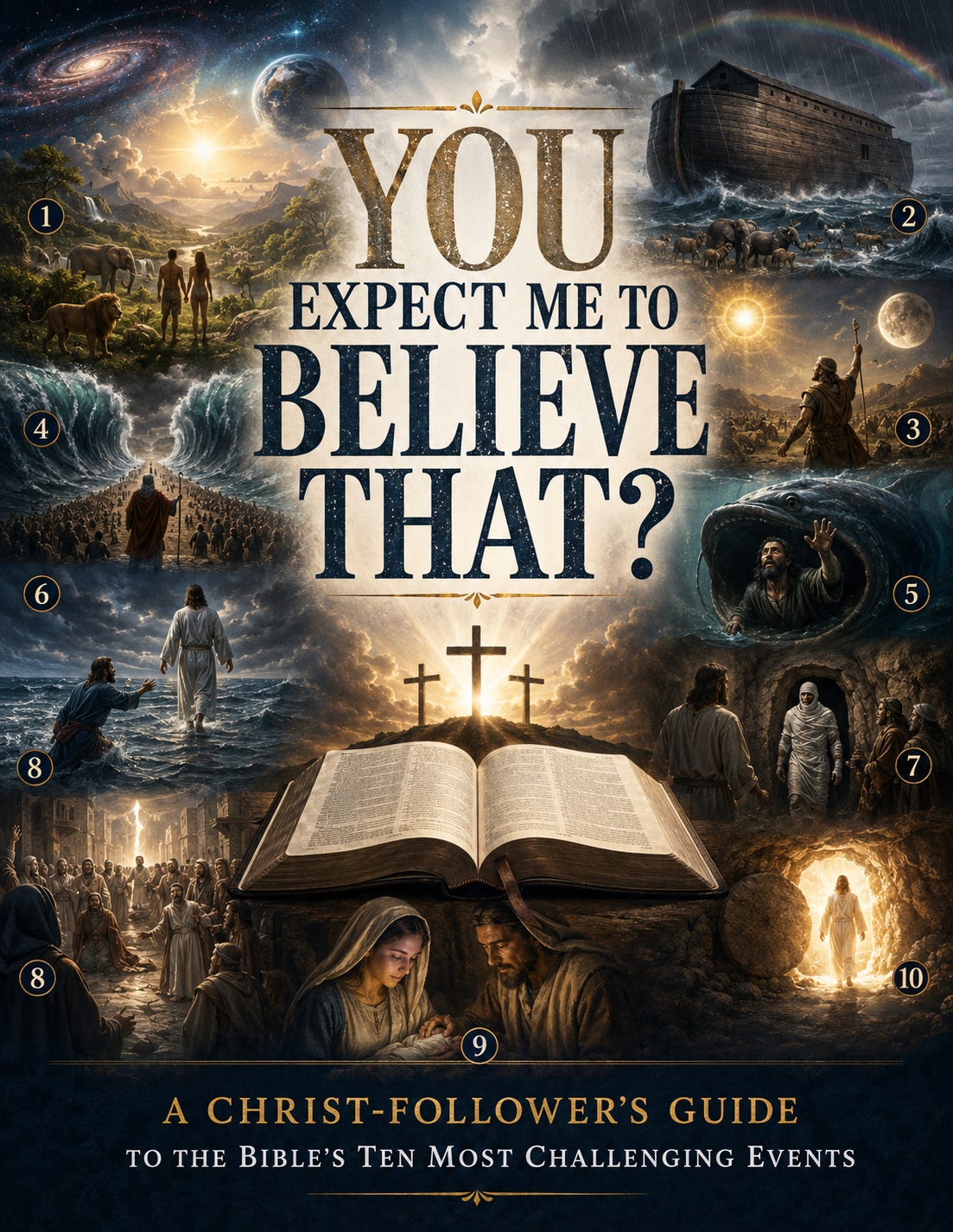
The Resurrection of Jesus
(Matthew 28; Mark 16; Luke 24; John 20)
Every miracle we’ve explored in these pages has led us here.
Creation. The Flood. The Red Sea. Jonah. The virgin birth. Every one of them raises the same question:
Can God do what seems impossible?
The resurrection is God’s final answer.
If Jesus did not rise from the dead, Christianity falls apart. The Apostle Paul said exactly that: “If Christ is not risen, your faith is futile.” Christianity is not built merely on wise teaching or inspiring moral principles. It stands or falls on one historical claim:
Jesus Christ died. Jesus Christ was buried. Jesus Christ rose again.
If that happened, everything changes.
What the Bible Says Happened
All four of the Gospels agree on the central facts.
Jesus was publicly crucified under the authority of Pontius Pilate. Roman soldiers confirmed His death. His body was wrapped in burial cloths and placed in a guarded tomb belonging to Joseph of Arimathea. A large stone sealed the entrance.
On the third day, several women came to complete the burial preparations. The stone had been rolled away. The tomb was empty. Angels announced that Jesus had risen from the dead.
Over the following forty days, Jesus repeatedly appeared to His followers. He spoke with them, walked with them, ate meals with them, allowed them to touch His wounds, and taught them about the kingdom of God.
These appearances were not limited to one frightened disciple or one emotional experience. Scripture records appearances to individuals, small groups, and even more than five hundred people at one time.
The resurrection wasn’t presented as a private vision. It was proclaimed as a public event.
Why This Seems Scientifically Implausible
Dead people stay dead.
Every branch of medical science confirms that reality. Once the brain is deprived of oxygen for an extended period and the body’s vital systems permanently cease functioning, life does not simply restart.
That is why death is so devastating. It is final.
Some have suggested Jesus merely fainted on the cross and later revived in the cool air of the tomb. But Roman executioners were experts at death. They had no interest in allowing condemned prisoners to survive.
Others claim the disciples stole the body. His followers became fearless witnesses willing to suffer persecution and death for proclaiming His resurrection. People may die for something they mistakenly believe to be true, but they do not willingly die for what they know to be a lie.
Still others argue that the disciples experienced hallucinations. Hallucinations, however, do not occur simultaneously to large groups of people over many different occasions. Nor do they explain the empty tomb.
Natural explanations struggle because they attempt to explain away an event the Bible presents as supernatural.
What God Actually Did
The resurrection was not simply the resuscitation of a corpse.
Jesus did not return to the same mortal life He had before, only to die again later. He rose in a glorified, immortal body.
His disciples recognized Him, spoke with Him, touched Him, and watched Him eat. Yet His resurrected body also possessed qualities that surpassed ordinary human limitations. He appeared suddenly among His followers and would never again be subject to death.
The resurrection was therefore an act of new creation.
The Father raised the Son through the power of the Holy Spirit, demonstrating complete authority over sin, death, and the grave.
Only the Author of life could restore life after death had done its work.
Why Believing This Is Reasonable
The resurrection is unique because it rests on more than the possibility of divine power.
It also rests on historical evidence. The empty tomb must be explained. The dramatic transformation of the disciples must be explained. The explosive growth of the early church must be explained. The repeated eyewitness testimony must be explained.
None of these facts, by themselves, forces someone to believe. But together they present a compelling historical case that demands an explanation.
Ultimately, however, the resurrection comes back to the same question we’ve asked throughout these pages. Who is Jesus? If He is merely a remarkable teacher, resurrection is impossible. If He is the eternal Son of God who created life itself, then death could not permanently hold Him.
The difficulty of any task is measured by the One doing the work.
If God created life in the beginning, restoring life is not beyond His power.
What This Miracle Reveals About God
The resurrection reveals that Jesus is exactly who He claimed to be.
Throughout His ministry, Jesus claimed authority to forgive sins, judge humanity, give eternal life, and stand equal with the Father. Those were astonishing claims. The resurrection is God’s public declaration that every one of them is true.
It also reveals that death does not have the final word. Death feels permanent because, from our perspective, it is. Every funeral reminds us that our lives are fragile and our days are numbered.
But that resurrection morning changed the story forever. Jesus entered death and walked out again. That means every person who trusts Him has hope beyond the grave.
Finally, the resurrection reveals God’s greatest victory. From the outside, Good Friday looked like defeat. Evil appeared to win. The Messiah was crucified, His followers scattered, and His enemies celebrated.
But God was accomplishing His greatest triumph through what looked like His greatest loss.
That is often how He works.
Closing Thought
As we’ve worked through these ten miracles, you’ve probably noticed a pattern.
Every miracle points beyond itself.
Creation points to the Creator.
The Flood points to God’s holiness and mercy.
The Red Sea points to His power to redeem.
Jonah points to His relentless pursuit of sinners.
The virgin birth points to His faithfulness.
Walking on water points to the divine identity of Jesus.
The resurrection gathers all of those truths together.
It is not merely one more miracle added to the list.
It is the miracle upon which every other Christian claim depends.
If Jesus remained in the tomb, then these pages are little more than interesting religious stories.
But if He truly rose from the dead, then He is exactly who He claimed to be—the Son of God, the Savior of the world, and the Lord of life itself.
That leaves each of us with a decision.
The greatest question is no longer, “Could these miracles have happened?”
The greatest question is, “What will I do with the One who performed them?”